

First Knowledge

Prepared Environment  

Early Childhood Language & Literacy Montessori Curriculum
From a Single Sound to a Sentence

The child first develops spoken language, then gains experience with written language, and lastly, begins the process of reading. Reading requires the child to analyze words by their component sounds and synthesize symbols into meaningful communication, so sufficient preparation through writing and language activities is essential before formal reading begins.

The language arts curriculum materials are structured in a carefully organized sequence. Each part of the sequence builds on previously mastered skills and gradually increases complexity in
sound patterns, word structure, and reading comprehension.

Write your awesome label here.

Aligned to the Science of Reading

Phonological Awareness

Decoding

Sight Recognition

Hearing the parts of a word
Before any letter appears, the child claps syllables, hears rhymes, isolates the first sound in a word, and blends sounds back into one. The ear is trained first, because a child who cannot hear the sounds cannot map them.
Sound to symbol, by hand
The child traces the Sandpaper Letters and says each sound, then builds words from loose letters. Spelling comes before reading, so the alphabetic principle is discovered rather than explained.
Words that will not sound out
A child slices a banana, eats it at the snack table, then washes the plate and sets it in the rack. Another fastens a coat alone, sleeve by sleeve. A third notices a spill nobody mentioned and goes to get the cloth.

Background Knowledge

Vocabulary

Language Structures

Knowing the thing before the word
The child grows the plant before naming its parts and handles the fish before puzzling it apart. By the time these words appear in print, they name something already familiar.
Real names for real things
Precise terms are given directly and confirmed in three steps: this is a pistil, show me the pistil, what is this. Nomenclature cards carry that language into every area of the classroom.
How sentences are put together
The most frequently used words in English are learned by sight and practiced until they come without effort. Fluency does not wait for the phonics sequence to finish.

Verbal Reasoning

Literacy Knowledge

Skilled Reading

Thinking past the literal
Open ended questions and guided discussion ask the child to explain, predict, and account for what they noticed. The answer is not in the room, so the child has to reason toward it.
How print works
The child learns that print carries meaning, moves left to right, and belongs to someone. Writing their own name is often the first proof that marks on paper stand for something real.
When the strands hold together
Fluent reading with comprehension is not a ninth skill but the result of the other eight becoming automatic. The child stops working at the words and starts thinking about what they say.

Complete Montessori Writing and Reading Sequence

Pink Series
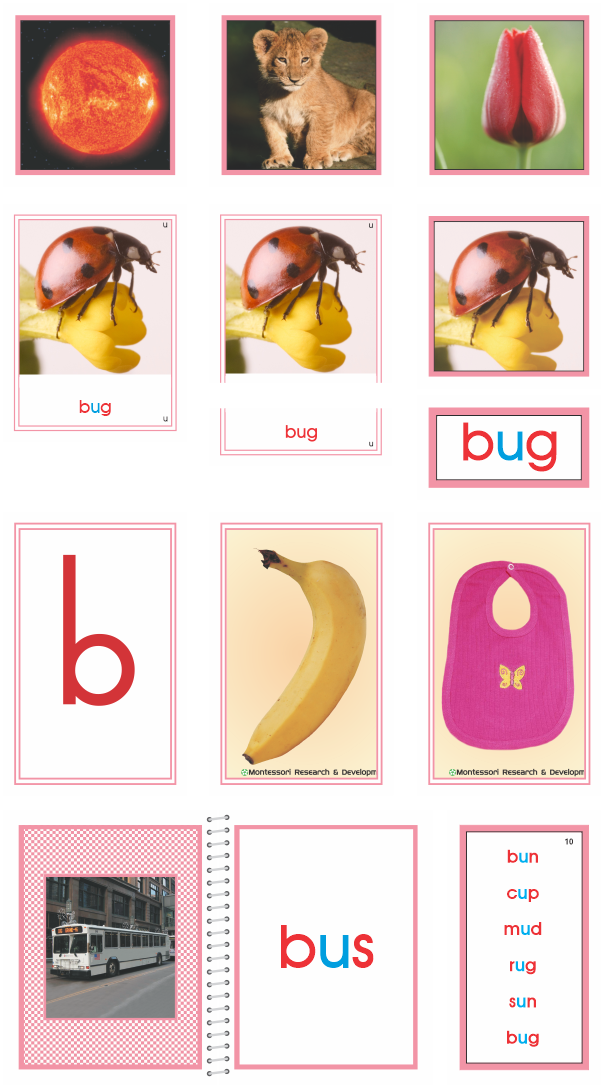
The Pink Series begins the Montessori writing and reading sequence. It introduces phonetic words that follow the consonant-vowel-consonant pattern and use short vowel sounds.

Lilac Series
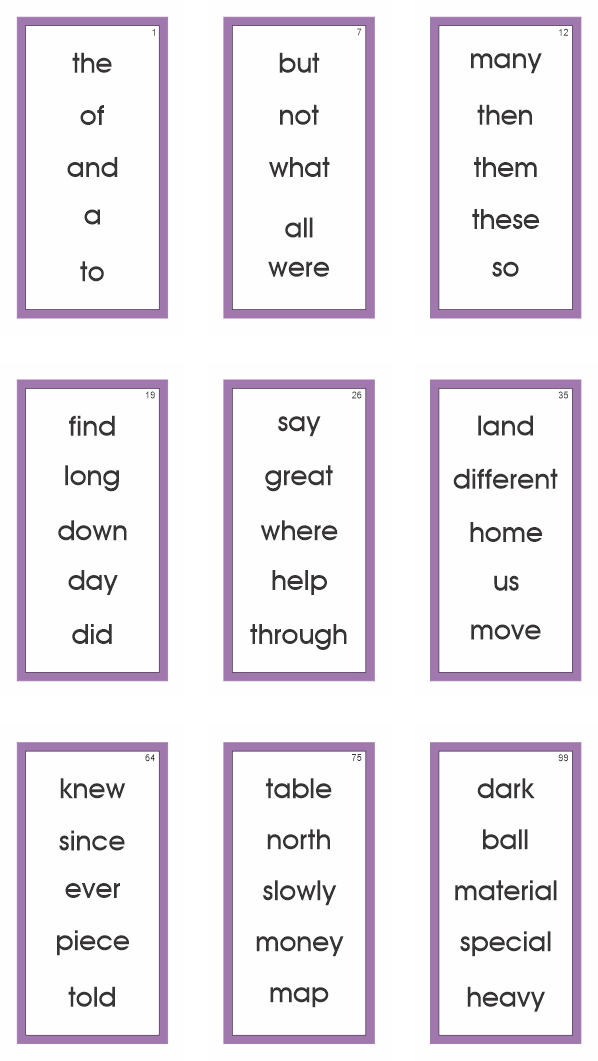
The Lilac Series covers the most frequently used words in the English language. Many are sight words that must be recognized rather than decoded phonetically.

Blue Series
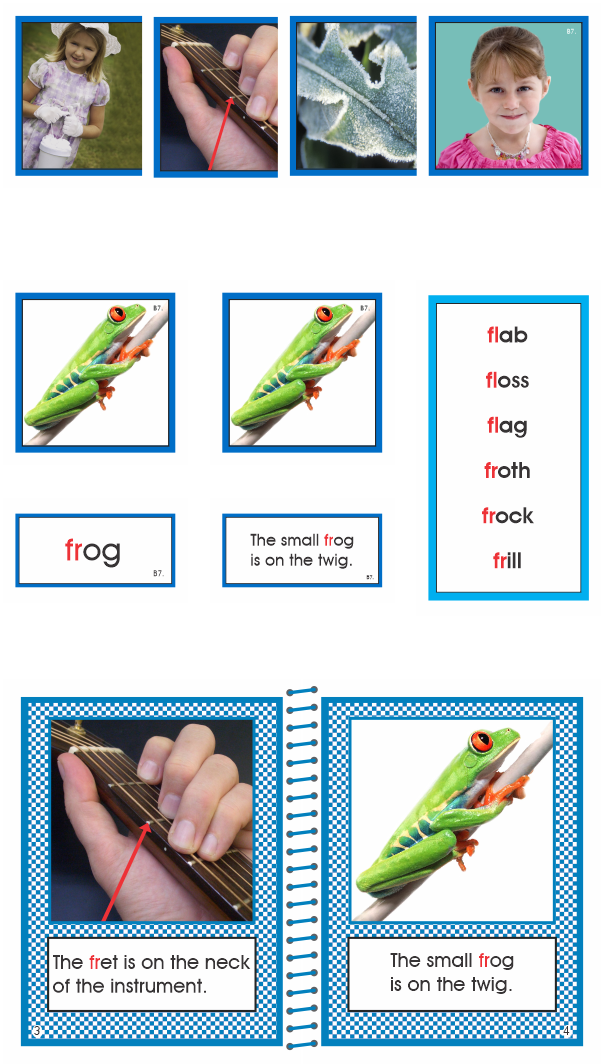
The Blue Series adds consonant blends once short vowel phonetic words are secure. Phonetic complexity increases while the sound rules stay consistent, and the child begins reading sentences.

Green Series
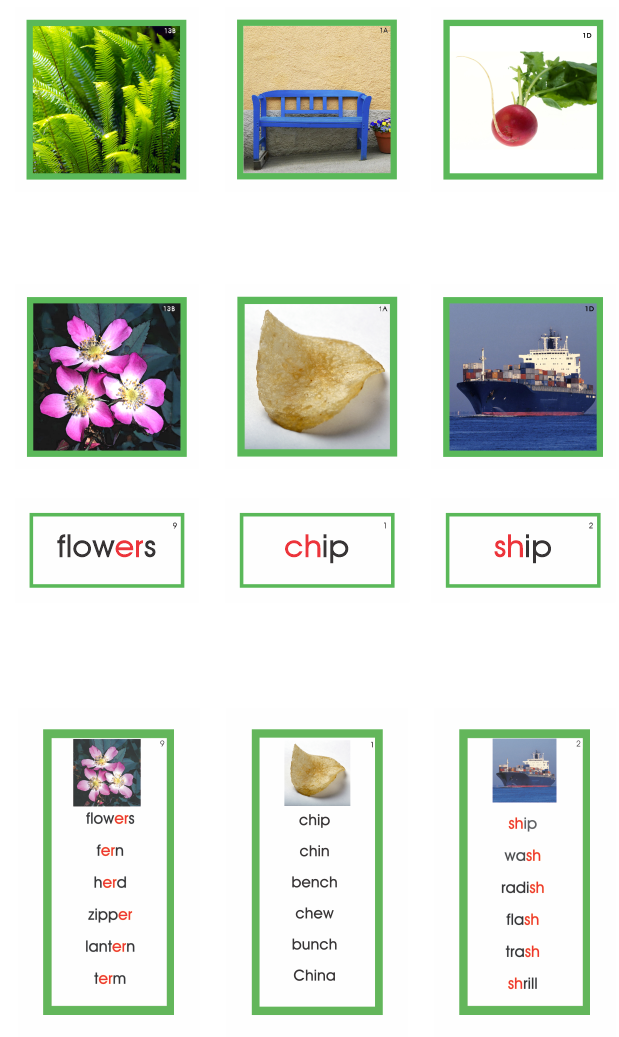
The Green Series presents phonograms, combinations of letters that produce a single sound. The child further develops encoding and decoding skills while expanding vocabulary.

Built for the Classroom
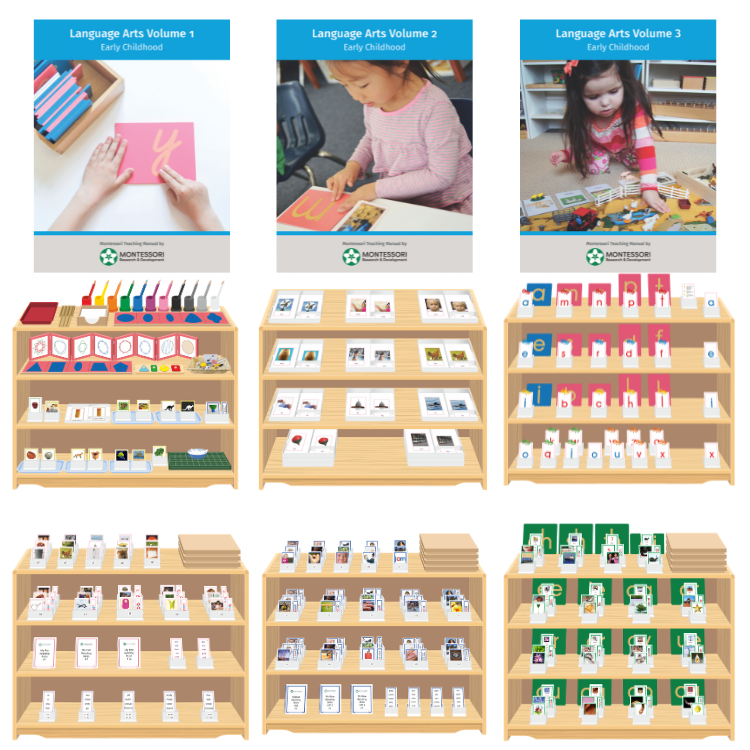
This is the Language Arts shelf as it's meant to look. Every material, every presentation manual, in sequence and accounted for. No gaps to fill in later, no hunting for the piece that didn't come in the box.

This is the Language Arts shelf as it's meant to look. Every material, every presentation manual, in sequence and accounted for. No gaps to fill in later, no hunting for the piece that didn't come in the box.

Pink Series

Pink Series

Blue Series

Blue Series

Green Series

What's Included?

Scope and Sequence

A defined path from the first spoken word to the parsed sentence, with nothing skipped and nothing left to the teacher to invent.

Teaching Manuals

Three volumes carrying the full sequence. Each presentation is written out step by step with clear illustrations, so a teacher can prepare a lesson before giving it.

  • Volume 1 — Listening, speaking, visual perception, and concept development. The oral and pre-reading foundation, built before any letter is introduced.
  • Volume 2 — Writing and reading. Metal Insets, Sandpaper Letters, the Movable Alphabet, and the full sequence through short vowel words, sight words, consonant blends, and phonograms.
  • Volume 3 — Grammar. The noun, article, adjective, verb, preposition, adverb, pronoun, conjunction, and interjection, each introduced through a key experience and the miniature environment.
Card Materials

More than forty sets of printed card materials that put each stage of the sequence into the child's hands.

The phonics sequence runs from initial sound pictures and phonic three-part cards through picture cards with word labels, single word booklets, and word lists. Consonant blend sets extend the same progression and add sentence reading. Phonogram sets follow, with editions matched to Nienhuis Double Sandpaper Letters. Memory Words cover the most frequently used words in English.

Alongside the reading sequence, visual perception and concept development sets build the discrimination and vocabulary that reading rests on: whole to parts, figure ground, look alike, opposites, spatial relationships, rhyming, and matching sets for fruits, vegetables, animals, seashells, and instruments. Selected sets are available in Spanish.

All cards are printed on 100lb cover stock and laminated front and back at 3mil.

Classic Montessori Materials

The apparatus the manuals present, included in the package.

  • Metal Insets with Sloping Stands
  • Chalkboards (3) — blank, grid, lined
  • Sandpaper Letters Print with Box
  • Double Sandpaper Letters Print with Box
  • Movable Alphabet Print (Pink/Blue)
  • Grammar Materials — Miniature Environment & Labels
  • Detective Adjective Exercise
  • Solid Grammar Symbols with Base
Skills Reporting

Two records, kept side by side.

The Student Record tracks the materials, set by set and list by list, so a teacher can see at a glance what has been given and what comes next. The Skills Report tracks the child, twice a year, in plain language a family can read.

One shows what has been taught. The other shows what the child can do.

Daily Implementation

The manuals show not only what to present but when and how the day holds it.

A sample daily classroom routine sets out the long uninterrupted work periods the sequence depends on. Independent choice activities give the child what to return to between presentations. Each presentation is given to one child at the moment they are ready for it, in slowed and isolated steps.

Empty space, drag to resize