First Knowledge

Prepared Environment  

Infant Toddler Montessori Curriculum
Birth to three, when children build trust, movement, and language through their own effort in a prepared room.

The Infant and Toddler curriculum covers Environments, Practical Life, Sensorial, and Language Arts, with presentations written separately for the infant, the mobile infant, the toddler, and the two year old. Every presentation states an age and is written out step by step, so teachers know what to offer, what to say, and when a child is ready for more.

 Aligned to Early Learning Standards
 Step-by-Step Presentations & Roadmap 
 Observation & Record Keeping  

What's Included?

Teaching Manuals

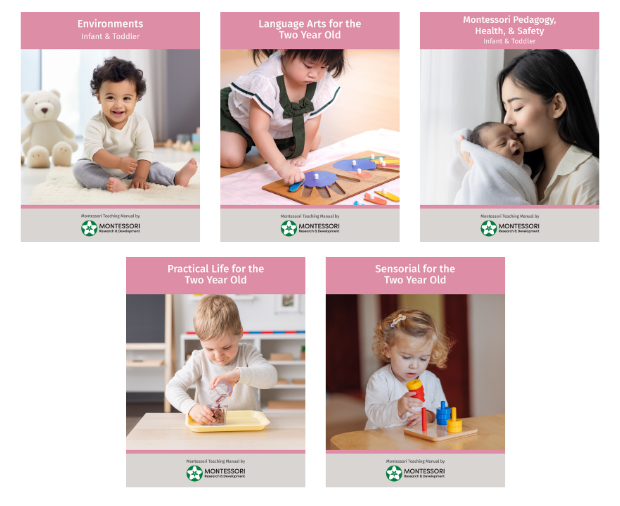
Five manuals covering every area of the Infant and Toddler curriculum.

  • Environments
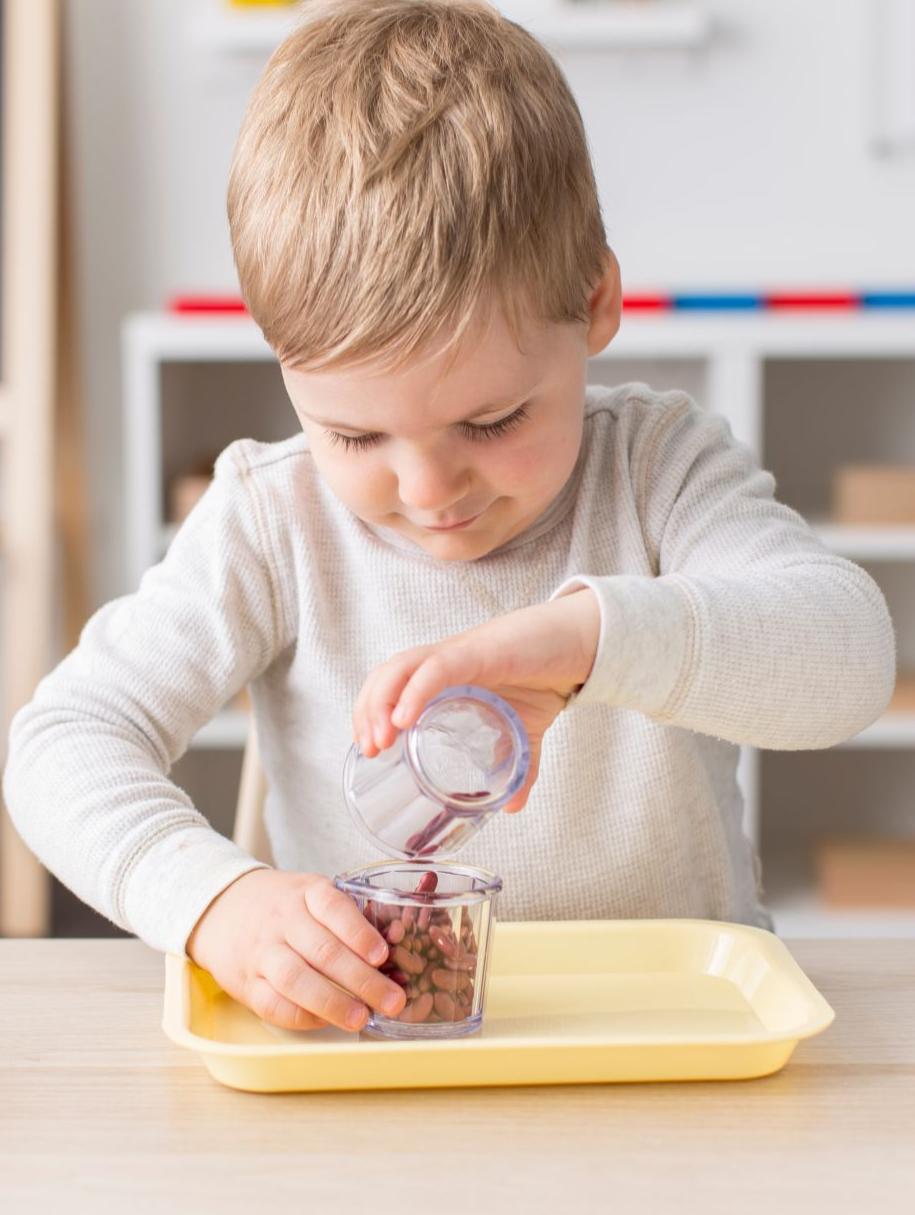
  • Practical Life for the Two Year Old
  • Sensorial for the Two Year Old
  • Language Arts for the Two Year Old
  • Montessori Pedagogy, Health and Safety
Card Materials

Twelve sets of printed card materials that put the language and concept work into the child's hands.

Matching sets carry the child through the visual discrimination sequence, from picture to picture with seashells, through whole to half with fruit, and on to vegetables, domesticated and wild animals, and rhythm and orchestra instruments. Concept development sets follow with association, opposites, and classification. Phonic pictures support early sound games with the two year old.

Classic Montessori Materials

Every apparatus a birth to three environment needs, sized and selected for the youngest children.

The imbucare boxes, stacking and nesting barrels, and the single cylinder block. The full set of four Cylinder Blocks, the Pink Cubes, the Brown Stair, and the Knobless Cylinders. Geometric solids with the mystery bag, and inset puzzles. Dressing frames for buttons, zipper, velcro, buckles, and snaps, each isolating one fastening the child will meet on their own clothes.

Order one package and open a complete prepared environment.

How the Room Changes as the Child Does.

In three years a child goes from lying still and watching, to crossing a room to reach something, to insisting on pouring their own water. No single room serves all three. Materials move down to the floor once the child can crawl to them, the objects change when the hands are ready to work, and the vocabulary arrives when the child is ready to use it. What follows is how the environment answers each stage.

The Young Infant

The Mobile Infant

The Toddler

Held, watched, and spoken to
The youngest child takes in the world before acting on it. The room offers a low mirror, a movement mat, something to look at from where they lie, and an adult who narrates what is happening. Everything sits at the child's eye level, because the child cannot yet choose where to look.
Everything is now within reach
Once the child can move, they go to what interests them rather than waiting for it to arrive. Low shelves, safe distances, a bar to pull up on, and objects worth crossing a floor for. The environment stops coming to the child and starts rewarding the child who comes to it.
Words, order, and I do it myself
Language arrives in quantity and independence becomes urgent. The child wants their own coat, their own cup, and things in their proper places. The environment answers with real practical life work, precise vocabulary for everything in the room, and an order the child can rely on and restore. 
Empty space, drag to resize